Colleges in Washington
Why go to College in Washington?

Going to college in Washington is an appealing option for many students. The state boasts beautiful scenery and a temperate climate, along with plenty of outdoor recreational activities that are available year-round, such as hiking, skiing, and boating. Washington's most populous city Seattle, hosts many cultural institutions and events, such as concerts, festivals, and galleries. Prospective students will find prestigious public and private traditional higher learning institutions throughout the state, along with impressive online colleges.
What Options are Available for Colleges in Washington?
On-Campus
For many high school graduates, moving away from home and attending a traditional college are the natural next steps on the path to a successful career. They're eager to live with new roommates, interact face-to-face with classmates and peers, and take full advantage of on-campus resources such as libraries and writing centers. This type of student benefits most from being able to attend lectures and instructors' office hours in person. They may also enjoy the social atmosphere of on-campus life and might choose to participate in sports or clubs. Part of the appeal of attending a traditional university is that students have the opportunity to explore their newfound independence among peers in a new and exciting environment.
Online Programs
Online schools in Washington provide an affordable alternative to traditional university campuses. Online programs allow students to access coursework at any time from anywhere in the world. Distance learners enjoy the convenience of viewing lectures and submitting class assignments on their own schedules. They may also save money as compared to traditional students since they don't need to pay for transportation or child care. Students enrolled in online colleges in Washington hail from every walk of life, but many are attracted to these programs because the flexibility allows them to work part- or full-time during their schooling. Students who do well in online programs are generally self-motivated and don't require a rigid structure to succeed.
Hybrid Programs
A hybrid program is yet another option that may appeal to degree candidates. These are programs in which students take some of their courses on campus and some online. This format may be right for the student who wants the flexibility to listen to lectures in their own time, but without being completely separated from the resources and support of a campus environment. Students with a variety of learning styles can succeed in a hybrid program. For example, many practical and scientific disciplines will require students to complete labs, practicums, or other on-campus classes while completing the majority of their school work online. Other students may want the opportunity to take some courses on campus until they feel more confident in their ability to work independently.
Popular Degree Programs in Washington
Students who want to live and work in the region after they graduate should keep a close watch on industry trends. Washington's thriving high-tech culture in its city centers, along with its abundant natural resources, define the major industries in the state. These industries are also reflected in Washington's two most popular majors : oceanography and business management and administration.
Oceanography Oceanography is the study of the oceans' diverse ecosystems and how they interact with and impact the planet as a whole. Oceanography is a popular major in Washington, as the state's proximity to the sea means much of its industry and importance as a region revolve around ocean resources and activities.
Business Management and Administration A business management and administration degree teaches you how to organize and run a business. Students learn how to maximize efficiency and profitability, manage employees, and thrive in a competitive environment. Since many large, multinational corporations call Washington home, graduates with this degree are well-suited to begin their careers in the region.
What are the Best Online Colleges in Washington?
Due to the variety of options available, choosing the right school can be overwhelming for some applicants. Prospective students may choose to enroll in a two-year college, a four-year university, or an online program. Before this choice can be made, however, it's useful to understand the unique characteristics of each school being considered. Our rankings of the best online colleges in Washington gives students the help they need to make an informed decision. Below you will find information about the degree concentrations schools offer and the types of resources they make available to distance learners.
Top 6 Online Colleges in Washington for 2019
Admissions Rate
80%
Graduation Rate
64%
Online Enrollment
11%
Retention Rate
78%
Default Rate
5%
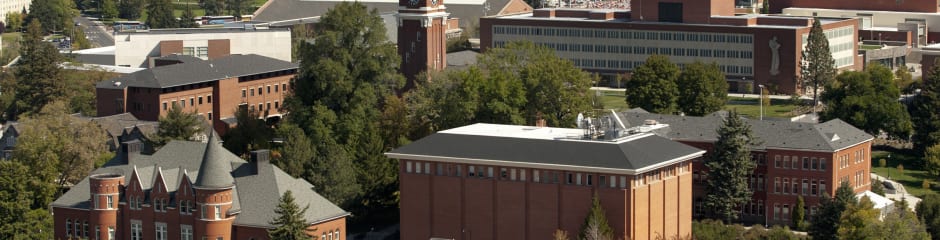
WSU, established in 1890, is one of the nation's top research institutions. Through the WSU Global Campus, students have access to a comprehensive catalog of online programs. As one of the top online colleges in Washington, WSU offers bachelor's degrees in accounting, criminal justice, economics, human development, management, and psychology.
Classes are delivered using the Blackboard learning management system. Some programs require students to enroll either part time or full time. Distance learners have access to online tutoring, writing labs, webinars, live-streamed events, online career fairs, online study groups, and virtual mentors to help with academic challenges. Admission requirements include a high school diploma or its equivalent for freshmen. WSU Global Campus offers undergraduate, graduate, non-degree, and teacher endorsement options.
Visit SiteSponsored
What are the Best Online Community Colleges in Washington?
Making the decision to pursue higher education is a big step. Beyond that, students need to decide whether a two-year or a four-year institution is right for them. Two-year programs are generally available at community colleges, which offer associate degrees, or at vocational schools, which offer certificates and career training.
Four-year colleges and universities are institutions where students can earn bachelor's, master's, and doctoral degrees. Four-year schools have traditionally been viewed as a higher level of education than community colleges, but that perception may be changing . Students interested in a postsecondary degree also have the option of pursuing their education through online schools in Washington.
Top 6 Online Community Colleges in Washington for 2019

Graduation Rate
32%
Online Enrollment
17%
Retention Rate
66%
Default Rate
14%
SCC is located north of Seattle and serves around 10,000 students per year. As one of the largest online community colleges in Washington, SCC's virtual campus offers 16 associate degrees and several more certificate programs. The school's honors college offers additional support and opportunities to students who plan to transfer to a four-year university. Those who enroll in the honors college can complete independent research through an optional research track, participate in a cohort community, and receive academic distinction.
SCC's online associate degrees include business technology, criminal justice, health information technology, and purchasing and supply chain management. Most online coursework is taught asynchronously, though some classes feature occasional synchronous requirements. The school provides several resources for its online students such as live librarian assistance, computer help, laptop rentals, and academic advising. Students enrolled in online programs pay discounted tuition.
Visit SiteSponsored
Education Trends in Washington
Although Washington spends less on postsecondary education per full-time student, and allocates a smaller percentage of tax revenue to higher education than does the nation as a whole, demographic studies reveal a relatively educated populace. Specifically, Washington has higher percentages of citizens over the age of 25 with associate degrees, bachelor's degrees, and graduate or professional degrees compared to the national average.
| Washington | United States | |
|---|---|---|
| Postsecondary Education Spending per Full-Time Student | $5,764 | $6,954 |
| Percent of Tax Revenue Allocated to Higher Education | 4.4% | 5.8% |
| Percentage of adults over 25 with associate degree | 9.8% | 8.1% |
| Percentage of adults over 25 with bachelor's degree | 20.9% | 18.5% |
| Percentage of adults over 25 with graduate degree or higher | 12.0% | 11.2% |
| Source: SHEEO and U.S. Census | ||
Paying for College in Washington
Projections state that by 2020, 65% of all jobs in the U.S. will require a postsecondary degree. Though a college education is increasingly necessary, it is sometimes cost prohibitive. Prospective students will find that different types of higher learning institutions confer degrees at different price points. Additionally, the region where a student chooses to reside while pursuing their degree can have a big impact on the overall cost of their education. Financial aid opportunities may vary depending on the type of school, area of the country, and student eligibility.
Tuition Prices
In general, tuition is the same for online colleges in Washington as traditional schools, and students can expect to pay less tuition at a public two-year institution compared to a public four-year university. The tradeoff is that a two-year degree may not lead to as many career opportunities as a four-year degree. Students should also consider other expenses that are incurred in the pursuit of a college degree, such as textbooks, transportation, and overall cost of living.
Financial Aid
No matter whether students are enrolled in traditional schools or online colleges in Washington, earning a degree can be very expensive. This means that students should pursue any and all opportunities that help them pay for their education. This process starts with filling out the Free Application for Federal Student Aid (FAFSA) . There are several types of financial aid available to students, including scholarships, grants, work-study programs, and loans . Scholarships and grants are gifts that students earn on the basis of demonstrated academic merit or financial need. This type of aid does not need to be repaid and is therefore the most desirable. Work-study is a program in which students are provided with part-time employment to help them work off some of the cost of their degrees. Loans are disbursements of money that must be repaid with interest, which means they should receive less priority compared to other forms of financial aid.
Cost for Online Programs in Washington
As a general rule, any financial aid given to a student may be applied to online programs in the same way it's applied to traditional, on-campus programs. Aside from financial aid, there are other ways that distance learners save money by getting their degrees at online schools in Washington. Since they don't have to pay for transportation or parking, these students have fewer costs as a result of taking classes and completing coursework from home. Additionally, online textbooks are often cheaper than their physical counterparts, and students with children may find that they save money on childcare by choosing one of the many online colleges in Washington.
Cost of Living by Region
As cost is such an important factor to most people considering earning their college degree, where they choose to live can make a huge difference. Some cities have a much higher cost of living than others, so judicious students may choose to base their decision in part on a school's location. For those who want to live and work in the cities where they attended school, the location's cost of living will be of even greater importance in the long term.
Scholarships for Washington College Students
Can all Scholarships be Used for Online Programs?
Most scholarships can be used for any type of program, whether it's online or in-person. Students should ensure they understand all of the requirements of a particular scholarship award, as some may stipulate that recipients attend a specific school or pursue a certain type of degree concentration in order to qualify. Students at either traditional or online schools in Washington can normally seek guidance from their school's financial aid office or the pertinent scholarship organization.
Employment Outlook in Washington
As of July of 2017, Washington's rate of unemployment was similar to, but just above, the national unemployment rate . However, the 2016 annual mean wage for Washingtonians was 11% higher than the average wage for workers in the U.S. as a whole, as reported by the U.S. Bureau of Labor Statistics (BLS).
Washington's biggest industries are can be summed up in three groups: finance, insurance, real estate, rental and leasing; professional and business services; and government. Since Boeing, Microsoft, and Amazon are all in the state, students who want careers in high-tech industries should also consider working in Washington.
| Washington | United States | |
|---|---|---|
| Unemployment Rate, July 2017 | 4.5% | 4.3% |
| Annual Mean Wage, May 2016 | $55,810 | $49,630 |
| Source: BLS and BLS | ||
Top Employers and Industries in Washington
Top Industries in Washington
Finance, Insurance, Real Estate, Rental, and Leasing : This sector revolves around the transactions of financial assets, risk assessment, and payments that are involved in the insuring of individuals and businesses. It also involves the buying, selling, and renting of property.
Government : The public sector in Washington is made up of state and local government services, along with jobs at federal agencies such as the U.S. Department of Defense. Public primary and secondary educational services are also included.
Professional and Business Services : Professional and business services refer to services provided in the professional, technical, or scientific arenas. Employees who maintain securities or management interests, or who provide contracted services for other companies, are also included in this category.
U.S. Department of Commerce and BLS
Top Employers in Washington
Boeing Co. : 44,000 employees
Microsoft Corp.: 40,000 employees
Amazon: 40,000 employees
Source: U.S. Department of Labor
Accreditation for Colleges in Washington
Accreditation is a process in which an approved agency evaluates a school's program and decides whether or not it meets the national or regional quality standards. National accreditation agencies frequently certify trade and vocational schools and don't apply standards as strict as those held by regional accreditation agencies. Employers may want to verify that a candidate's school is properly accredited when evaluating job qualifications. In addition, in many fields professional licensure requires a degree from an accredited institution. For these reasons, students considering either traditional or online schools in Washington may want to look for regional accreditation status when choosing a program.
According to U.S. News & World Report , accreditation standards are equally demanding for online schools as they are for on-campus schools. However, there may be special considerations for online colleges in Washington that don't apply to traditional institutions, such as the level of student-teacher interaction in the online environment and the type of resources available to distance learners. Students who wish to attend online schools in Washington should look for evidence that the school has been accredited by an agency approved by the U.S. Department of Education and the Council for Higher Education Accreditation . The regional accrediting agency responsible for Washington is the Northwest Commission on Colleges and Universities .
Resources for Students in Washington
Washington Student Achievement Council : The Washington Student Achievement Council promotes the value and benefits of postsecondary education by spearheading the planning of statewide coordination efforts and administering financial aid to students.
Association for Higher Education (at Washington Education Association) : Through community outreach, coalition building, and lobbying, this organization advocates for the needs of higher education instructors and students, specifically at community colleges or technical institutions.
Western Interstate Commission for Higher Education : WICHE is a regional organization with 15 member states in the western U.S. that participate in resource sharing and student transfer and exchange programs. Most notably, WICHE enables students attending member campuses to pay less than out-of-state students.
Washington Higher Education Technology Consortium : The Washington Higher Education Technology Consortium aims to improve the efficiency and quality of technology used by higher education facilities across the state of Washington. They coordinate the implementation and maintenance of technological services for students at various public, postsecondary schools in Washington.
Washington State Adult Education Advisory Council : The Washington State Adult Education Advisory Council is appointed by the governor to ensure that all residents of Washington have the knowledge, skills, and credentials necessary to earn a living wage and contribute to a successful state economy.
Washington State Board for Community and Technical Colleges : The WSBCTC is focused on directing, coordinating, and advocating for Washington's system of 34 public community and technical colleges. They work to raise the knowledge and skill levels of students in two-year colleges in the state in order to strengthen the competitiveness of Washington's economy.