Colleges in South Dakota
Why go to College in South Dakota?
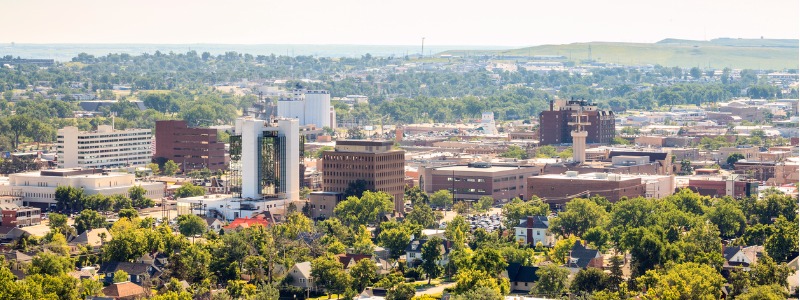
South Dakota might conjure images of flat cornfields and winding back roads, but residents of the state call it the "land of variety," referring to its diverse geography, weather, and economy. South Dakota is also a center of academic activity in the Midwest, with several major colleges and universities around the state. Home to major research institutions, small liberal arts schools, tribal colleges, technical schools, and community colleges, South Dakota offers options to accommodate students of all backgrounds.
What Options are Available for Colleges in South Dakota?
On-Campus
If you live near a college and have the time and ability to attend classes regularly, a more traditional college experience may be right for you. Taking courses on campus, you join a community of fellow students and benefit from the full selection of campus resources, such as computer labs, libraries, tutoring services, and academic counseling. On-campus classes are usually active and engaging, making it easy for you to participate in class discussions, lectures, or group work. The campus environment may also make it easier for you to communicate with faculty members and build bonds with classmates through student clubs, sports, and other activities.
Online Programs
Online programs offer many of the same resources as on-campus courses, though there are some notable differences. Perhaps the biggest is that online learning is far more self-directed: You are typically responsible for working through course material and completing assignments on your own, and you must be able to keep track of deadlines and keep yourself motivated. Some online courses are offered synchronously, with set course schedules and virtual class meetings (often conducted through video conferencing) that mimic the classroom experience. Other courses are asynchronous, meaning they can be completed on your own schedule. If you have work or family obligations, or live in a rural area and can't travel to a college campus, online learning offers a convenient way to earn a degree in your free time.
Hybrid Programs
If you're interested in a traditional collegiate experience but have commitments outside school, hybrid programs offer the best of both worlds, allowing you to take a mixture of online and classroom courses. Some hybrid programs let you take any combination of courses as it suits your schedule, while others offer a set number of courses online and others on campus. Scientific and practical disciplines often have lab or practicum requirements that can't be completed through online classes. A hybrid program can be useful as it allows you to combine the community and support of campus courses with the flexibility of online learning.
Popular Degree Programs in South Dakota
South Dakota's status as the "land of variety" is also reflected in two of the state's most popular majors : business management and biology. The state's top industries, which include agriculture and bioscience, requires both business acumen and knowledge of the life sciences. It should be no surprise, then, that the state's most popular majors reflect the needs of its major industries.
Business Administration and Management In a business program, you gain a broad understanding of how businesses function, grow, and maintain profitability, studying topics such as accounting, finance, communication, and development strategies. The number of businesses and industries present in South Dakota make this degree a natural choice.
Biology Biologists explore the processes underlying life, including how organisms function, grow, and develop. As a biology major, you also examine how these processes affect real world issues like human health and the environment. South Dakota's agriculture and bioscience industries make this major an ideal choice.
What are the Best Online Colleges in South Dakota?
The schools compiled in this list represent the best online colleges in South Dakota using criteria such as affordability, convenience, and academic excellence. Choosing the right college can have a major impact on the next two to four years of your life, which is why it's important to make an informed decision. Showcasing a variety of educational models, online platforms, degree programs, and tuition levels, this list can help you find the school that best suits your goals and interests. Whether you're a returning student or brand new to higher education, this ranking can take much of the stress and grunt work out of the college application process.
Top 8 Online Colleges in South Dakota for 2019
Admissions Rate
74%
Graduation Rate
52%
Online Enrollment
30%
Retention Rate
77%
Default Rate
7%
Founded in 1862 in Vermillion, the University of South Dakota is the state's oldest university. Among the most affordable online colleges in South Dakota, USD boasts a strong commitment to diversity and inclusiveness at all levels. Distance learners can choose from more than 40 online programs , including dental hygiene, social work, and business administration. Graduate certificate options include long-term care management, disaster mental health, and literacy leadership and coaching. Most degrees can be earned entirely online. However, some programs, such as the master's in music, do have some campus-based components. Residents and nonresidents of South Dakota pay the same tuition rates. Veterans and military personnel can take advantage of additional support services, including a veterans resource center. Distance learners also benefit from extensive library resources and an online writing center.
Visit SiteSponsored
What are the Best Online Community Colleges in South Dakota?
When considering online colleges in South Dakota, it's important to recognize the distinction between community colleges and four-year universities. Awarding associate degrees and certificates, community colleges tend to focus on vocational training and career preparation. An associate degree can also be a cheaper way to fulfill the general education requirements of a four-year degree. Four-year universities are typically larger and house a wider selection of majors and degree options, including bachelor's, master's, and doctoral degrees. The list below outlines the best online community colleges in South Dakota, comparing degree requirements, program characteristics, and admissions criteria to help you make an informed decision.
Top 4 Online Community Colleges in South Dakota for 2019

Graduation Rate
70%
Online Enrollment
16%
Retention Rate
74%
Default Rate
12%
MTI is located in Mitchell and is among the best online community colleges in South Dakota. On its 80-acre campus, about 70 miles from Sioux Falls, MTI offers 33 academic programs, five of which are available online. Online areas of study include small business management, medical imaging, and speech-language pathology.
MTI boasts a graduation rate that is among the best in the country for two-year colleges, as well as a 99% job placement rate. Current students and alumni can turn to MTI Career Services for help with resumes, cover letters, and interviews, as well as to search for job opportunities. More than 86% of students receive financial aid, which may include scholarships, grants, and loans. To apply, prospective students should complete the online application and submit transcripts and required test scores.
Visit SiteSponsored
How We Ranked the Schools
To determine the best programs, we looked at the most important factors prospective students, mainly common predictors of future success and a school's commitment to online programs. This boils down to admissions rate, student loan default rate, retention rate, graduation rate, and the percent of students enrolled in online classes. All data points are taken from information provided by colleges and universities to the National Center for Education Statistics.
Each factor is weighted evenly in order to give an objective view and determine the best online master's in management information systems programs. To calculate our rankings, we looked at a school's ranking when organized by a single factor, and then averaged each category's ranking to find an overall score: Admissions Rate (20%) + Default Rate (20%) + Retention Rate (20%) + Graduation Rate (20%) + Percent of Students Enrolled in Online Classes (20%) = Final score.
Education Trends in South Dakota
Despite its small population and lack of major cities, South Dakota residents over age 25 are highly educated, boasting a higher number of people with associate and bachelor's degrees than the average U.S. state. And while the state spends slightly less on each full-time college student than the U.S. average, it actually commits an above-average portion of its tax revenue toward higher education, demonstrating South Dakota's commitment to its students.
| South Dakota | United States | |
|---|---|---|
| Postsecondary Education Spending per Full-Time Student | $5,062 | $6,954 |
| Percent of Tax Revenue Allocated to Higher Education | 6.4% | 5.8% |
| Percentage of adults over 25 with associate degree | 10.7% | 8.1% |
| Percentage of adults over 25 with bachelor's degree | 19.0% | 18.5% |
| Percentage of adults over 25 with graduate degree or higher | 8.0% | 11.2% |
| Source: SHEEO and U.S. Census | ||
Paying for College in South Dakota
While it's true that you can't put a price on your education, you can certainly keep price in mind when determining where to pursue a degree. South Dakota's public four-year schools offer lower tuition than the average U.S. school, but higher-than-average tuition for public two-year schools. It's important to research different schools and determine how their tuition matches up with your financial needs.
Tuition Prices
The following table compiles tuition rates at public two-year and four-year colleges in South Dakota and compares them to national averages. Keep in mind that these numbers reflect tuition only and exclude other expenses like textbooks, transportation, housing, and living expenses.
Financial Aid
Regardless of where you go to school, one of the most important parts of the college admissions process is filling out the Free Application for Federal Student Aid (FAFSA) , which determines your eligibility for grants, scholarships, loans, and work-study awards. Depending on your income level and background, the FAFSA may unlock funding options that don't need to be repaid. Grants and scholarships should always be your first choice for financing, followed by work-study awards that pay you to work part-time while attending school. Government loans are another option and have generous repayment policies. Private loans, which generally charge higher interest rates, should be used as a last resort.
Cost for Online Programs in South Dakota
If you're enrolled in one of the many online colleges in South Dakota, you should still fill out the FAFSA since you have access to all the same financial aid opportunities as traditional students. The only difference is that as an online student, you can avoid many of the costs associated with an on-campus education. While the tuition for online programs is usually about the same as traditional programs, you can save money on transportation, meals, textbooks, and child care.
Cost of Living by Region
One of the advantages of being enrolled in online schools in South Dakota is the state's low cost of living. While rent and mortgages typically aren't included in estimated college costs, they can have a major effect on both the overall cost of your education and your career options after graduation. The following chart compiles information on average rental and home prices from cities in both South Dakota and some of its neighboring states.
Scholarships for South Dakota College Students
Can all Scholarships be Used for Online Programs?
Most schools and scholarship organizations don't distinguish between online and traditional students in terms of eligibility, though it's usually a good idea to check with the school or organization just to be sure. Certain scholarships, particularly those offered by colleges, have residency requirements that may preclude some distance learners.
Employment Outlook in South Dakota
While South Dakota is small, the state's economy is diverse and includes areas such as finance, healthcare, retail, and agriculture. While mean wages in the state are lower than the national average, they're offset by a lower cost of living. South Dakota also boasts a lower-than-average unemployment rate, ranking in the top 10 states with low unemployment. And while its gross state product is lower than many larger states, Forbes ranks South Dakota among the top 10 states for business , citing its prominent banking sector and the low cost of doing business.
| South Dakota | United States | |
|---|---|---|
| Unemployment Rate, May 2017 | 3.3% | 4.3% |
| Annual Mean Wage, May 2016 | $40,070 | $49,630 |
| Source: BLS and BLS | ||
Top Employers and Industries in South Dakota
Top Industries in South Dakota
Bioscience: Bioscience is a field with medical, agricultural, and environmental applications. It is important for everything from medical devices manufacture to biorenewable resources. A disproportionate share of South Dakota residents choose to major in biology, reflecting the dominance of this industry.
Financial Services: Financial services includes banks, investment funds, insurance companies, credit card companies, and other institutions that manage money. Lenient state regulations make South Dakota a popular place for the financial services sector, and the state is home to major financial institutions including Wells Fargo and Citibank.
Agriculture: Agriculture is the largest industry in South Dakota, with an economic impact of over $20 billion annually. Agriculture in the state is dominated by the dairy and food processing industries. Over 98% of farms in the state are family-owned.
Top Employers in South Dakota
Avera Medical: 17,000 employees
Federal Government: 11,100 employees
Sanford Medical: 11,000 employees
State Exchange Programs for South Dakota College Students
While there are many online schools in South Dakota, the state's low population does result in fewer education options for state residents. As a result, many states offer exchange programs that allow you to attend an institution in another state while paying the same tuition rate as in-state residents. The following table lists some of the options available for you as a South Dakota resident, though it's important to check with individual schools to ensure you qualify for in-state tuition.
South Dakota residents are eligible to pay a reduced tuition rate that's 150% of resident tuition at two- and four-year colleges in participating states. This program accepts a limited number of students each year.
Eligible States: Alaska, Arizona, California, Colorado, Hawaii, Idaho, Montana, Nevada, New Mexico, North Dakota, Oregon, South Dakota, Utah, Washington, Wyoming
Accreditation for Colleges in South Dakota
Another factor to consider when looking at online schools in South Dakota is accreditation status. Accreditation is a process in which colleges are evaluated to ensure they meet rigorous standards of academic quality. Accreditation lets you know that a school is legitimate degree-granting institution that will be recognized by the government, employers, and other schools. Schools are accredited either regionally or nationally. Regional accreditation is typically reserved for not-for-profit schools, such as four-year colleges and universities. Nationally accredited schools are typically for-profit institutions that offer career and technical training. Of the two, regional accreditation is generally considered more desirable. The Higher Learning Commission is the regional accrediting body responsible for South Dakota.
Entire schools or individual programs can be accredited, and online programs must adhere to the same standards as traditional programs. When looking at online colleges in South Dakota, it's a good idea to examine the accreditation status of the program you're considering. The keeps track of most accredited degree programs, colleges, and accrediting organizations, which makes it a useful resource if you want to check the accreditation status of a different online schools in South Dakota.
Resources for Students in South Dakota
Select Dakota: Select Dakota provides application and admissions resources for prospective college students of all levels, including current grade school students, recent high school graduates, returning adult students, and transfer students.
South Dakota Board of Regents: Governing the major public colleges in the state, the South Dakota Board of Regents offers information on topics such as scholarships, distance education programs, loan forgiveness, and student health services.
South Dakota State Government: Education: The state government website provides information on all higher education institutions in the state, including public schools, private schools, tribal colleges and universities, postsecondary technical institutes, and public higher education centers.
Western Interstate Commission for Higher Education: WICHE provides a number of informational resources for students, including information on financial aid, academic initiatives, state policies, and more.
Midwestern Higher Education Compact: MHEC's website includes financial and administrative information for South Dakota's higher education services, including data on education spending, selected performance indicators, and state education demographics.